
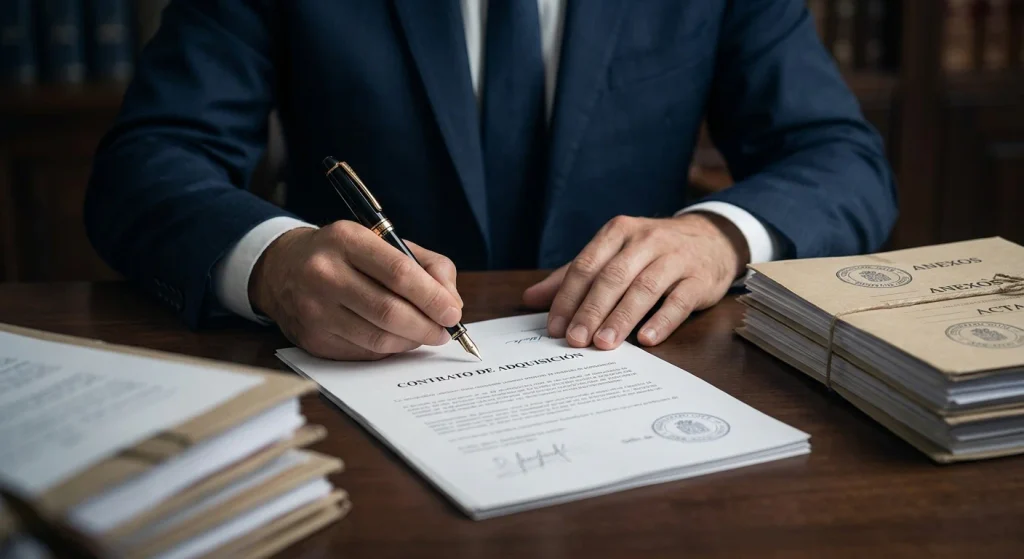
Inheriting property in Spain: a guide for foreign heirs
If a relative has died and left a home, land or money in Spain, you will usually need to accept the inheritance before a Spanish notary, pay the relevant taxes and register the property in your name. The first tax deadline is six months from the date of death, so it helps to start early.
We are an inheritance law firm in El Ejido, Almería. We handle Spanish inheritances for foreign heirs and owners, and we work in English.
Which law applies?
For deaths since 17 August 2015, Spanish authorities apply EU Regulation 650/2012. As a general rule, the law of the country where the deceased habitually lived governs the whole inheritance. A person may instead choose the law of their nationality in their will, and this can also apply to British nationals.
This matters because it can decide who inherits and whether children or a spouse have compulsory rights. Spanish tax and property registration rules still apply to property in Spain, whichever law governs the inheritance.
The main steps
- Get the death certificate. A foreign certificate generally needs an apostille and an official translation into Spanish.
- Check whether there is a will. The Spanish certificate of last wills can be requested 15 working days after the death. It shows whether a Spanish will was registered. A foreign will generally also needs an apostille and a sworn translation.
- Identify the heirs. If there is no will, heirs need a declaration of heirs or the equivalent document under the law that applies.
- Apply for an NIE. Each heir generally needs this Spanish foreigner identification number. It is a common source of delay, so apply early.
- Value the estate and review debts. This includes property, bank accounts, vehicles, insurance and any debts. Heirs can be liable for debts if they accept without limitation, so review them before signing.
- Sign before a notary. Heirs accept and divide the inheritance in a public deed. If you cannot travel, you can usually give a power of attorney in your own country, with an apostille and translation.
- File the taxes. See the section below.
- Register the property. The deed is presented at the Land Registry. Then update the Cadastre, local property tax (IBI), the community of owners and utilities.
Taxes and deadlines
| Tax | Deadline | Key point |
|---|---|---|
| Spanish Inheritance Tax | 6 months from the death. A 6-month extension can be requested within the first 5 months. | Each heir files for their own share, even where no tax ends up being due. |
| Municipal capital gains tax (plusvalía) | 6 months from the death, extendable to 1 year on request. | It applies to urban land and is paid to the town hall. |
Your tax position depends on where the deceased and the heirs lived, how you are related, what you inherit and its value. Non-resident heirs generally file with the Spanish State Tax Agency. Where the legal connection requirements are met, they can usually apply regional rules, including if they live outside the EU.
If Andalusian rules apply, spouses, children and other direct descendants or ascendants can benefit from a reduction of up to €1,000,000 and a 99% tax credit. That can lower the bill considerably, but each case must be checked before filing. Late filing can lead to surcharges and interest.
Frequently asked questions
Do I have to travel to Spain?
Not always. Many steps can be handled through a representative with a power of attorney. We will tell you at the start what is needed in your case.
Do I need a Spanish will?
A Spanish will is not always required, but a clear will can make the process simpler for your family. If you own property in Spain, it is worth checking that your Spanish and foreign wills do not conflict.
There is a UK grant of probate. Is it enough?
It may help, but it does not by itself complete the Spanish process. You will still normally need the Spanish steps above, including the notary, taxes and registration.
Can I sell the property straight away?
You can generally sell once the inheritance has been accepted, the taxes settled and the title put in order. Sales by non-residents have their own tax rules, so review them before agreeing a price.
What if the heirs disagree?
We first try to reach an agreement. If this is not possible, the heirs may need negotiation and, as a last resort, court proceedings to divide the inheritance.
How we can help
We explain your options in clear English, give you a written quote before we start, and you always deal directly with the lawyer handling your case. We can coordinate the documents, notary, taxes and registration.
You can also email contacto@diazyvalleabogados.com.
This page is general information and does not replace advice on your specific case.